Mastering Statistics Fundamentals: A Simple Guide for Beginners
Have you ever wondered how people make sense of all the numbers in the world? statistics fundamentals From sports scores to weather reports, numbers are everywhere! Understanding statistics fundamentals is like learning a secret language that helps you read the story behind those numbers. You don’t need to be a math genius to get started. In fact, statistics is really just a tool for organizing information so we can make better decisions. Whether you are looking at your school grades or trying to figure out which video game is the most popular, you are using the basics of data.
In this guide, we are going to explore the world of statistics fundamentals in a way that is easy and fun. We will look at how we collect information and what we do with it once we have it. By the time we finish, you’ll see that numbers aren’t scary—they are actually quite helpful! Let’s dive into the basics of how data works and why it matters in our daily lives
The Role of Moiz Kala in Content Creation
| Attribute | Details |
| Name | Moiz Kala |
| Profession | SEO Expert & Content Strategist |
| Expertise | Data Analysis, Search Engine Optimization |
| Focus Area | Educational Content & Technical Writing |
| Goal | Making complex topics easy to understand |
| Writing Style | Human-centric, engaging, and clear |
What Are Statistics Fundamentals Exactly?
When we talk about statistics fundamentals, we are talking about the building blocks of math that deal with data. Data is just a fancy word for information. Imagine you ask ten friends what their favorite ice cream flavor is. The answers you get are your data. Statistics fundamentals help you take those answers and turn them into a clear picture. Instead of just having a list of names and flavors, you can say, “Most of my friends like chocolate.” That is the power of statistics in action!
The Importance of Learning Statistics Early
You might think that statistics fundamentals are only for grown-ups with big office jobs, but that is not true! Learning these basics early helps you think more clearly. It teaches you how to look at information and decide if it makes sense. In a world where we see ads and news every day, knowing statistics fundamentals helps you stay smart. You will start to notice when someone is using numbers to try and trick you, and you’ll know how to find the real truth behind the data.
Exploring the World of Descriptive Statistics
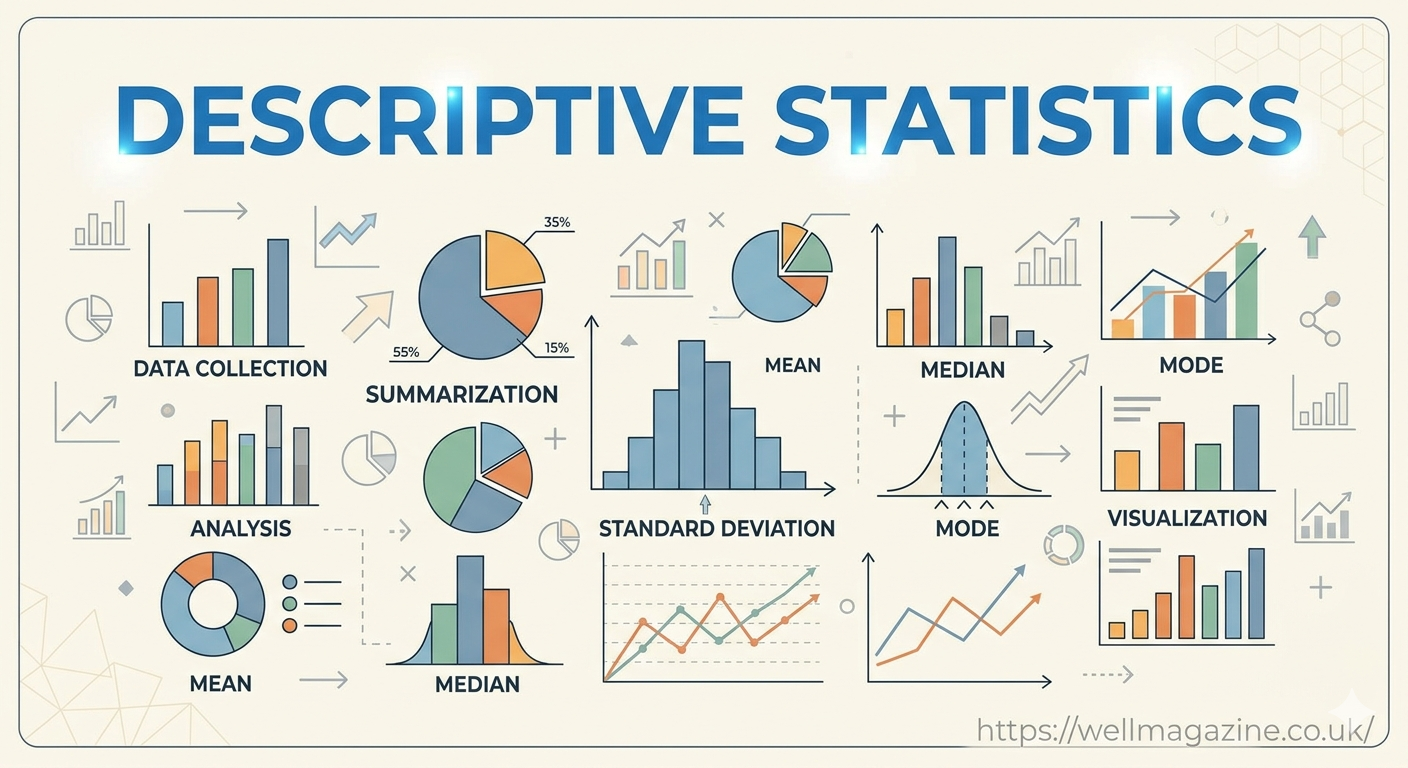
One of the most important parts of this topic is descriptive statistics. This is the branch of math that helps us describe what our data looks like. Instead of guessing, we use specific tools to summarize information. For example, if you have a bag of marbles, descriptive statistics would tell you how many are red, the average size of the marbles, and if most of them are the same color. It’s all about creating a summary that is easy for anyone to understand at a single glance.
Mean, Median, and Mode: The Big Three
To master statistics fundamentals, you have to meet the “Big Three.” These are the tools we use to find the middle of our data. The Mean is the average (adding everything up and dividing). The Median is the exact middle number in a list. The Mode is the number that shows up the most often. Using these parts of descriptive statistics helps you understand what a “normal” result looks like in any group of numbers you are studying.
Understanding Data Variation and Range
Sometimes, knowing the middle isn’t enough. We also need to know how spread out our numbers are. In statistics fundamentals, we call this the range. If you are measuring the height of your classmates, and the shortest is 4 feet while the tallest is 5 feet, your range is 1 foot. This part of descriptive statistics tells us if our data is all bunched together or spread far apart. It adds more detail to the story our numbers are trying to tell us.
How We Collect Data Honestly
A big part of statistics fundamentals is making sure the information we collect is fair. If you only ask people who love dogs what the best pet is, your data will be biased. To have good statistics fundamentals, you need to ask a mix of different people. This is called “sampling.” A good sample represents everyone fairly. This makes your final report much more trustworthy and useful for others who might read it later on.
Visualizing Data with Charts and Graphs
Sometimes, a picture is worth a thousand numbers! In statistics fundamentals, we use charts and graphs to show our work. Bar graphs, pie charts, and line graphs are all ways to display descriptive statistics so they are easy to see. When you see a colorful chart, your brain can understand the information much faster than by looking at a long list of boring digits. This is why many people love using visual tools when they talk about data.
Probability: Guessing the Future with Math
Did you know that statistics fundamentals can help you guess what might happen next? This is called probability. It is the math of chance. For example, if you flip a coin, there is a 50% chance it will land on heads. By using statistics fundamentals, we can look at what happened in the past to predict what might happen in the future. It’s not magic; it’s just using data to make an educated guess about the world around us.
Common Mistakes to Avoid in Statistics
Even experts can make mistakes with statistics fundamentals. One big mistake is “cherry-picking,” which means only choosing the numbers that make you look good. Another mistake is ignoring the size of your group. If you only ask two people a question, your statistics fundamentals won’t be very strong. It is always better to have more data and to be honest about what the numbers are showing, even if it’s not what you expected.
Using Statistics in Your Daily Life
You are already using statistics fundamentals every day! When you check the weather and see a 90% chance of rain, you are looking at data. When you look at the “star ratings” on a toy you want to buy, you are looking at descriptive statistics. Realizing that these math concepts are part of your real life makes learning them much more exciting. Statistics isn’t just a school subject; it’s a way to understand how the whole world works.
Conclusion:
Learning statistics fundamentals is a journey that never really ends. The more you look at the world through the lens of data, the more interesting things you will find. We have talked about how descriptive statistics help us summarize the world and how simple tools like the mean and median give us a clear path to the truth. Remember, numbers are your friends! They help you prove your points and understand others better.
I hope this guide has made you feel more confident about jumping into the world of math. Whether you are doing a school project or just curious about your favorite sports team’s wins, use your new knowledge of statistics fundamentals to dig deeper. Keep asking questions, keep collecting data, and most importantly, have fun with the numbers you find!
FAQs:
1. What is the easiest way to explain statistics fundamentals?
It is the study of how we collect, organize, and understand information (data) to see patterns and make smart decisions.
2. How does descriptive statistics help me in school?
It helps you summarize your grades or research projects so you can show exactly how well you are doing or what you discovered.
3. Is the “Mean” always the best way to find the average?
Not always! Sometimes the “Median” is better if you have one or two numbers that are much higher or lower than all the others.
4. Why do we use graphs in statistics fundamentals?
Graphs make it easier for our eyes to see the “big picture” of the data without having to read every single number.
5. Can statistics fundamentals help me win games?
Yes! By understanding probability and patterns, you can make better choices in strategy games or sports.
6. Do I need a calculator for statistics?
While a calculator helps with big numbers, you can do many basic parts of descriptive statistics with just a pencil and paper!
What is one way you have used numbers today to make a choice? I’d love to hear your thoughts!