Smart Sensors in Vacuum and Mop Combo Robots
Introduction
Smart sensors are integral to the functionality of vacuum and mop combo robots, enabling them to navigate, clean effectively, and automate home cleaning. These sensors allow robots to perform tasks autonomously, making them a valuable asset in home automation.
Let’s explore smart sensors in vacuum and mop combo robots, highlighting key aspects of their operation and impact.
Types of Smart Sensors
Several types of smart sensors are used in vacuum and mop robots to ensure efficient cleaning:
Navigation Sensors
Navigation sensors help robots understand their surroundings and move efficiently. Key types include:
- LiDAR (Light Detection and Ranging): Uses laser beams to create a detailed map of the room, enabling systematic cleaning patterns.
- Vision Sensors (Cameras): Allow robots to “see” their environment, identify obstacles, and differentiate between floor types.
Cleaning Performance Sensors
Sensors that enhance the cleaning process include:
- Dirt Detection Sensors: Identify areas with high concentrations of dirt, prompting the robot to focus on those spots.
- Floor Type Sensors: Detect whether the robot is on carpet or hard floor, adjusting cleaning settings accordingly.
Obstacle Avoidance Sensors
These sensors prevent robots from getting stuck or damaging property.
- Infrared (IR) Sensors: Detect obstacles and prevent collisions.
How Smart Sensors Enhance Cleaning
Smart sensors improve the cleaning process in several ways:
- Mapping and Navigation: Robots use sensors to create maps of the home, ensuring complete floor coverage.
- Adaptive Cleaning: Floor type sensors enable robots to adjust suction power and water distribution based on the surface being cleaned.
- Obstacle Avoidance: Robots can navigate around furniture, cords, and other obstacles, preventing interruptions.
- Edge Cleaning: Some robots have sensors that allow them to follow edges of walls and corners for a thorough clean.
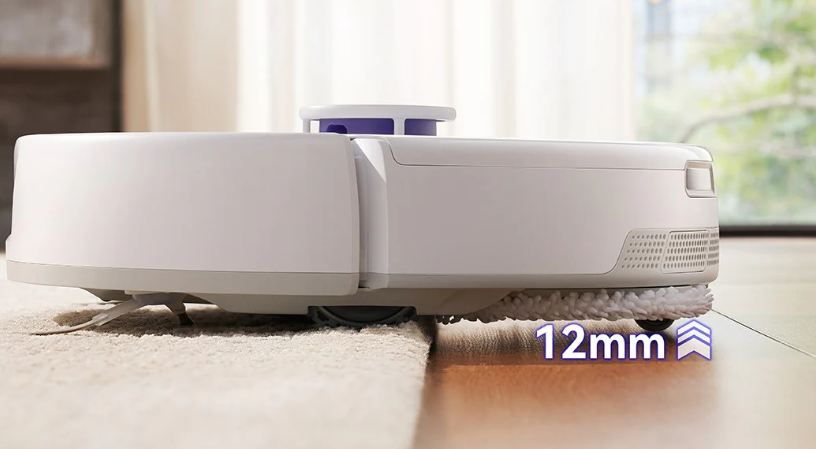
- Carpet Detection: To avoid wetting carpets during mopping, robots use sensors to lift the mop pads or adjust their path.
The Role of Artificial Intelligence (AI)
AI plays a significant role in processing data from smart sensors, leading to intelligent decision-making:
- Object Recognition: AI algorithms identify objects to avoid or clean around them accurately.
- Cleaning Pattern Optimization: AI learns cleaning habits and adapts schedules for personalized cleaning.
- Voice Control Integration: AI enables voice command recognition for hands-free operation.
Benefits of Smart Sensor Technology
Smart sensors in vacuum and mop robots offer several benefits:
- Automation: Frees up time by automating floor cleaning tasks.
- Efficiency: Optimize cleaning routes, saving time and energy.
- Convenience: Remotely controlled via smartphone apps, allowing for on-demand or scheduled cleaning.
- Customization: Offer personalized cleaning settings based on individual preferences and home layouts.
Challenges and Future Trends
Despite advancements, there are challenges and ongoing development:
- Sensor Accuracy: Improving accuracy is important for navigating complex environments.
- Cost: Reducing the cost of high-end sensors will expand affordability.
- Improved AI: Developing more sophisticated AI for better object recognition.
- Integration with Smart Home Systems: Increase integration with other smart home devices.
- Enhanced Battery Life: Optimize battery life to maximize cleaning time.
Conclusion
Smart sensors have revolutionized vacuum robots, transforming them into efficient and convenient home automation tools. These sensors enable robots to adapt to different conditions, avoid obstacles, and ensure thorough cleaning.
As technology advances, expect to see these robots more intuitive, efficient, and integrated into daily life.